
Siskiyou County Sex Offender Checks
The California Megan's Law Website is the official public registry channel for Siskiyou County. California DOJ manages the site, and the California Sex and Arson Registry supplies its underlying information. Registrants provide updates to local law-enforcement agencies, which transmit registration data for the state system.
The official California registry is the starting point for a local name, address, or map-based check.
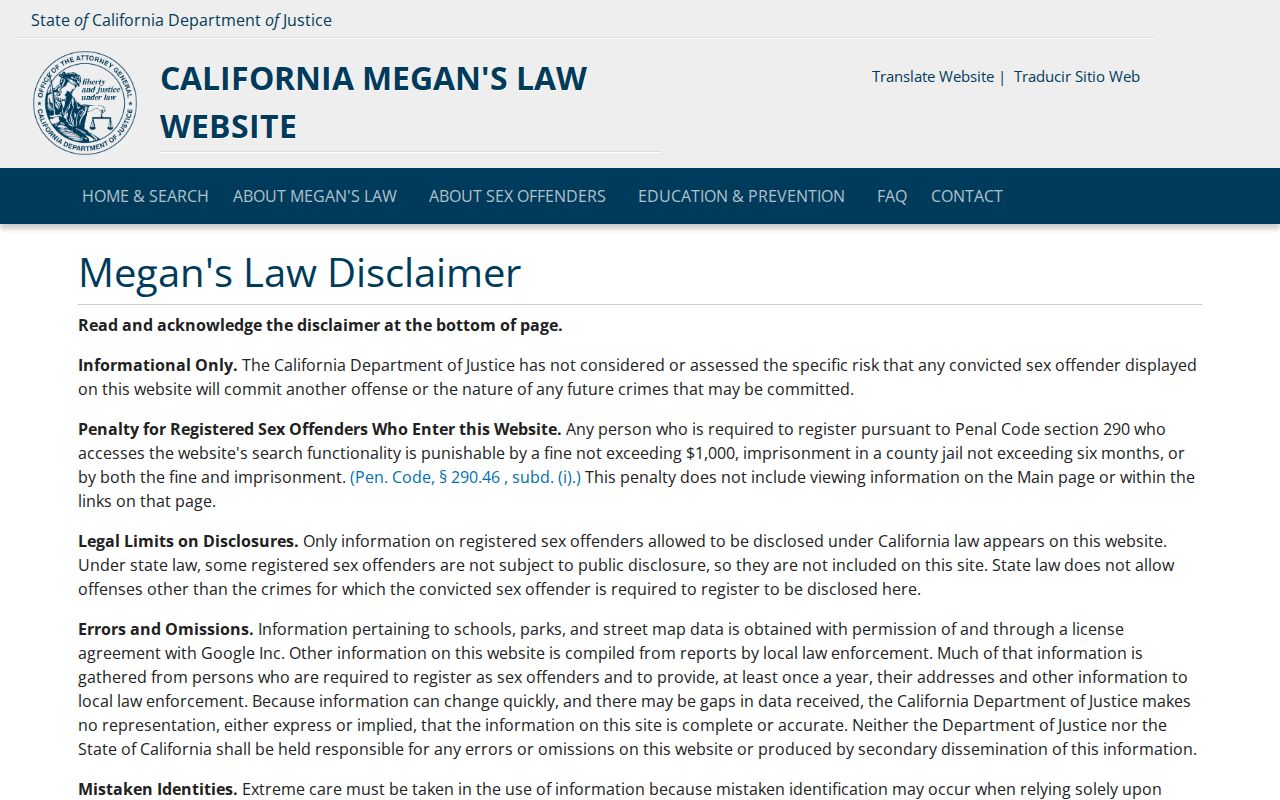
The state interface should be used directly because copied lists may be stale, incomplete, or detached from DOJ's current warnings.
California's Registry Behind the Search
California Penal Code section 290.46 directs DOJ to notify the public about specified registered sex offenders. The public website is a disclosure layer, not the complete California Sex and Arson Registry. Some registered people are not subject to public display, and offenses unrelated to registration are not published there.
The DOJ Megan's Law summary explains the relationship between local registration data, the state registry, and the public website.
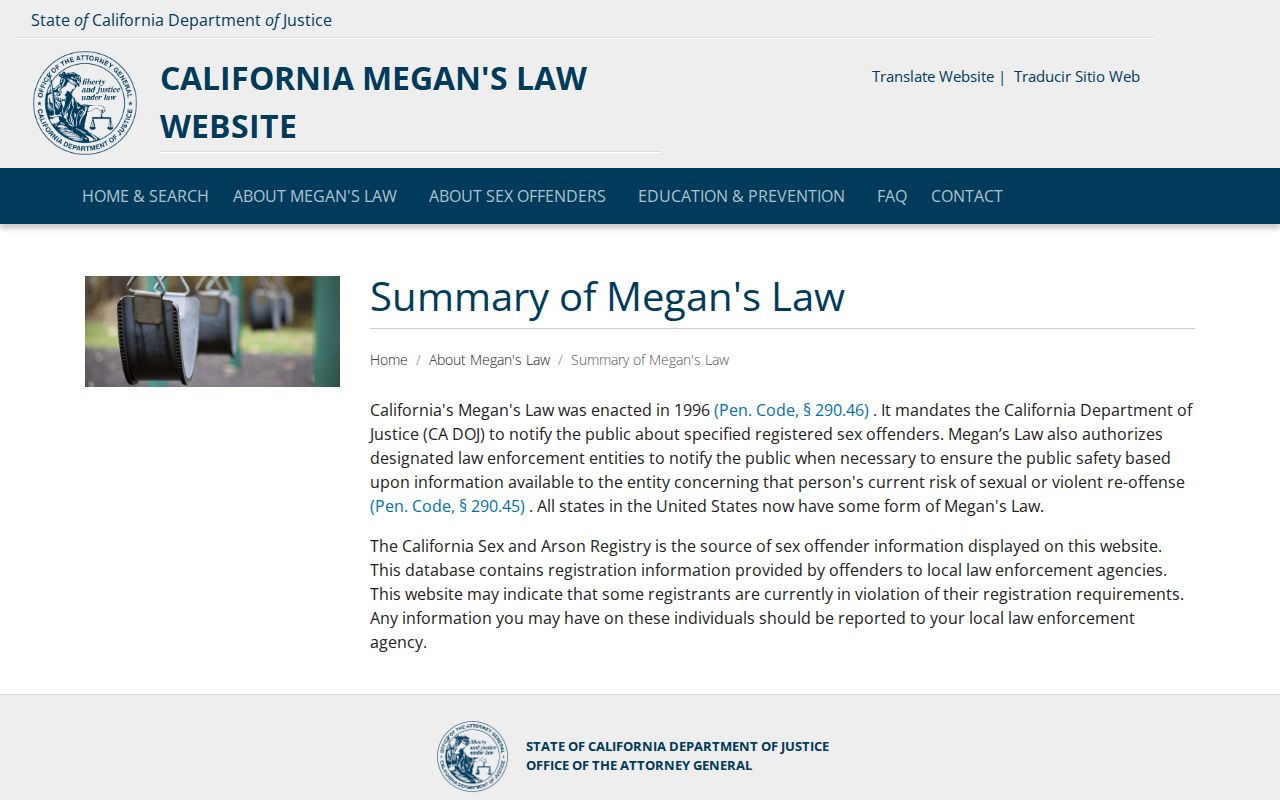
This distinction explains why a no-result search is not proof that no registration record exists.
Public disclosure is limited: Megan's Law shows only information California law permits DOJ to disclose, not every field held in the state registry.
California Megan's Law Searches
Prepare a name or location before entering the official site. Match several profile details rather than relying on one shared name, approximate age, or address.
- Open the California Megan's Law Website and read the terms and disclaimer before accepting them.
- Choose a name search or use address, radius, map, city, ZIP, or county controls available in the current interface.
- For a location search, enter Siskiyou County or a place such as Yreka, Mount Shasta, or Weed and review the map or list.
- Open a possible match and compare the photograph, aliases, physical description, location level, registration offense, and status warnings.
- If information appears wrong or a person may be out of compliance, report it to the appropriate police or sheriff's office or email DOJ at MegansLaw@doj.ca.gov.
| Field or control | Type | Required | Use |
|---|---|---|---|
| Disclaimer acknowledgement | Checkbox or button | Yes | Confirms the conditions of use before searching |
| Name | Text | No | Find a possible registrant by name |
| Address and radius | Location search | No | Review disclosed records near a location |
| County, city, or ZIP | Text or selection | No | Narrow results to Siskiyou or a community |
| Map or list view | Display control | No | Compare geographic and result-list views |
| Continue or Search | Button | Yes after criteria | Runs the selected query |
Mistaken Identity and Missing Profiles
DOJ warns that names, ages, and addresses can be shared or outdated, so matching only one field can identify the wrong person. Compare the available photograph, aliases, physical descriptors, scars or tattoos, disclosed location, offense information, and update warnings. Information may change quickly or contain gaps while local and state agencies process updates.
A person may also be registered without appearing publicly because California law does not require every registrant to be displayed. The public site excludes non-registration offenses as well. For suspected errors, contact the local agency responsible for the registration record or DOJ rather than circulating an unverified claim.
Note: DOJ states that it has not assessed the chance that a displayed person will commit another offense.
Registry Profiles: What They Show
The precise display varies by legal disclosure category and available data. A profile may show enough information to distinguish people and understand the registration basis, but it is not a full criminal history or court file.
| Name and aliases | Published identity names associated with the registration record. |
|---|---|
| Photo and description | Available photograph, sex, height, weight, hair, eye color, and distinguishing marks. |
| Location | Residence address or a less specific ZIP- or county-level location, depending on disclosure law. |
| Registration offense | Qualifying offense, statute, conviction, or jurisdiction details where disclosed. |
| Tier information | Tier or registration-duration information when made available. |
| Status | Compliance or violation indicator and source or update warnings, if shown. |
| Excluded information | Non-disclosable registrants and offenses that do not require registration are not published. |
Siskiyou Sheriff Registration Contact
Registrants update information through local law enforcement. For county routing, the Siskiyou County Sheriff's Office is at 305 Butte Street, Yreka, CA 96097, with main phone 530-842-8300. A city police department may direct a registrant or reporting person differently when the relevant address is inside city limits.
Siskiyou County Sheriff's Office
305 Butte Street
Yreka, CA 96097
530-842-8300
Call before visiting to confirm the correct registration contact and availability.
Concerns about possible noncompliance should go to local law enforcement. Corrections may also be reported to DOJ at MegansLaw@doj.ca.gov. The sheriff and city public-alert channels may carry notices when an agency issues them, but the Megan's Law Website remains the standing public search.
Choose the agency by the relevant location. An address inside Yreka, Mount Shasta, or Weed may route to that city's police department, while a county-area concern routes to the sheriff. Provide the profile URL or identifying public details and describe the suspected error without collecting or publishing additional private information. Law enforcement and DOJ are the channels that can verify and correct the underlying registration data.
Registration Levels and Duties in California
California uses a tiered system under Penal Code section 290. The published minimum periods describe the general adult tier structure, while juvenile periods and eligibility for relief may differ. Tier duration should not be treated as a prediction of future conduct.
| Tier | Minimum period | Public-search meaning |
|---|---|---|
| Tier 1 | 10 years | Lowest minimum adult registration period; disclosure still follows California law |
| Tier 2 | 20 years | Middle minimum period; profile visibility depends on statutory disclosure |
| Tier 3 | Lifetime | Lifetime tier unless statutory relief applies |
Registration verification frequency depends on legal status and requirements not fully documented in the county research. Readers should not infer a check-in schedule from the tier table; the Sheriff's Office or other registering agency can provide the applicable official instructions.
The minimum period also does not guarantee that a profile will vanish on an anniversary. Statutory eligibility, petitions or other relief, juvenile rules, and agency processing can affect the record. Conversely, lifetime Tier 3 status describes a legal registration duration, not an individualized finding about future danger. Use the tier only for the limited meaning the official profile assigns to it.
NSOPW Near the Oregon Border
Siskiyou County borders Oregon, so a California-only search may not answer a safety question that crosses the state line. The Dru Sjodin National Sex Offender Public Website searches participating public registry data across jurisdictions. It supplements rather than replaces California Megan's Law.
The official NSOPW service provides the appropriate cross-state search layer.
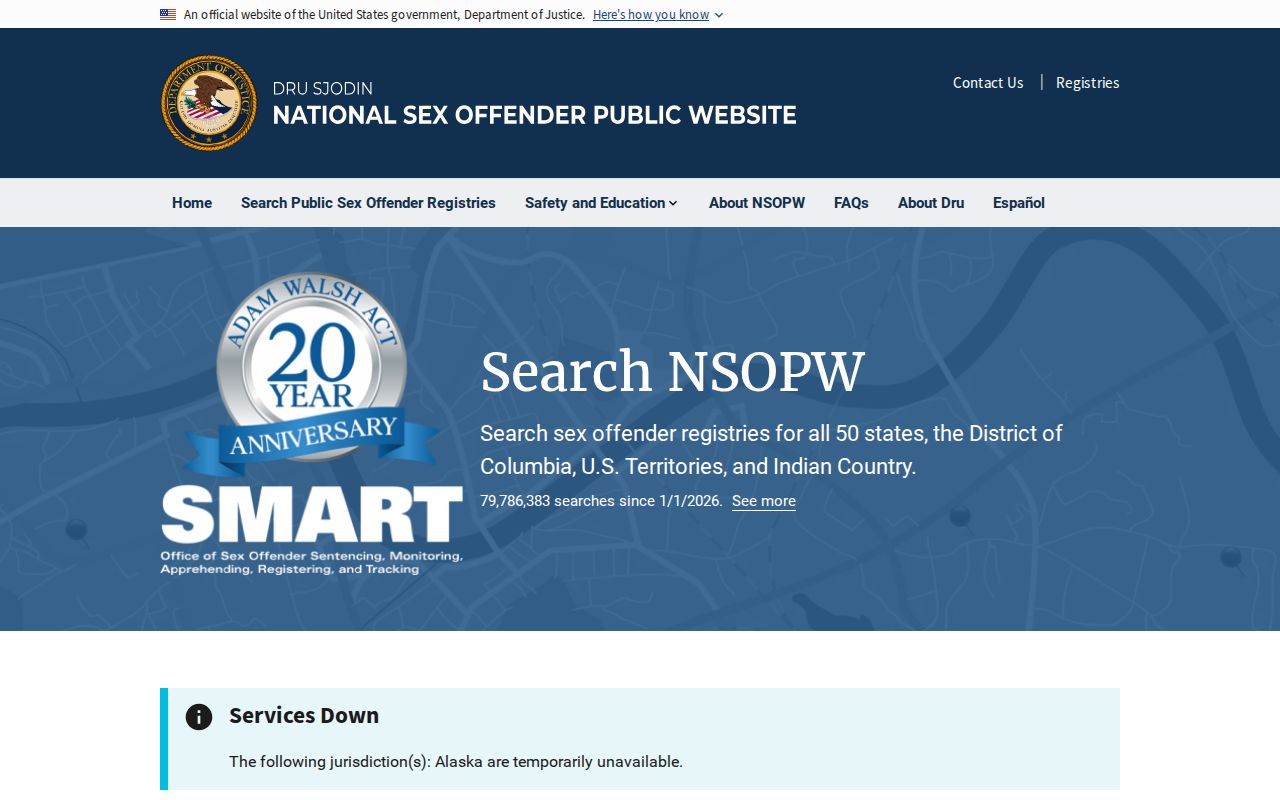
When a result concerns a California location, return to the California profile and local agency for the current state-specific details and correction process.
| Source | Use it for | Limit |
|---|---|---|
| California Megan's Law | Official California public profiles and location searches | Only statutorily disclosable California information |
| NSOPW | Cross-state public registry search | Underlying state and territory systems control their records |
| Local law enforcement | Registration routing, error reports, or noncompliance concerns | Not a substitute for browsing the public statewide registry |
Registry Listings Do Not Predict Risk
DOJ expressly says it has not considered or assessed the specific risk that any displayed registrant will reoffend or the nature of a possible future crime. A map point or profile establishes public registration information, not a forecast. Sensible safety planning uses the record as one verified source without confrontation, speculation, or public accusations beyond what the profile states.
Because details can change quickly, revisit the official profile and check its source warnings before acting on location information. If a disclosed address or identity seems inconsistent, send the concern to law enforcement or DOJ for correction rather than attempting an investigation.
Location display can also vary by disclosure category. One profile may publish a residence address while another provides only a ZIP code or county-level location. That difference does not establish compliance or noncompliance by itself. The same caution applies when an address marker appears near a city boundary or rural road: use the official profile text, not a visual estimate from a map, and let the responsible agency resolve discrepancies.
Using Registry Information Lawfully
California authorizes registry information to protect a person at risk. It cannot lawfully be turned into harassment, threats, intimidation, vigilantism, or prohibited discrimination. The DOJ misuse page identifies serious criminal enhancements and civil remedies for abuse of the data.
The DOJ penalties-for-misuse page states the official restrictions and consequences.
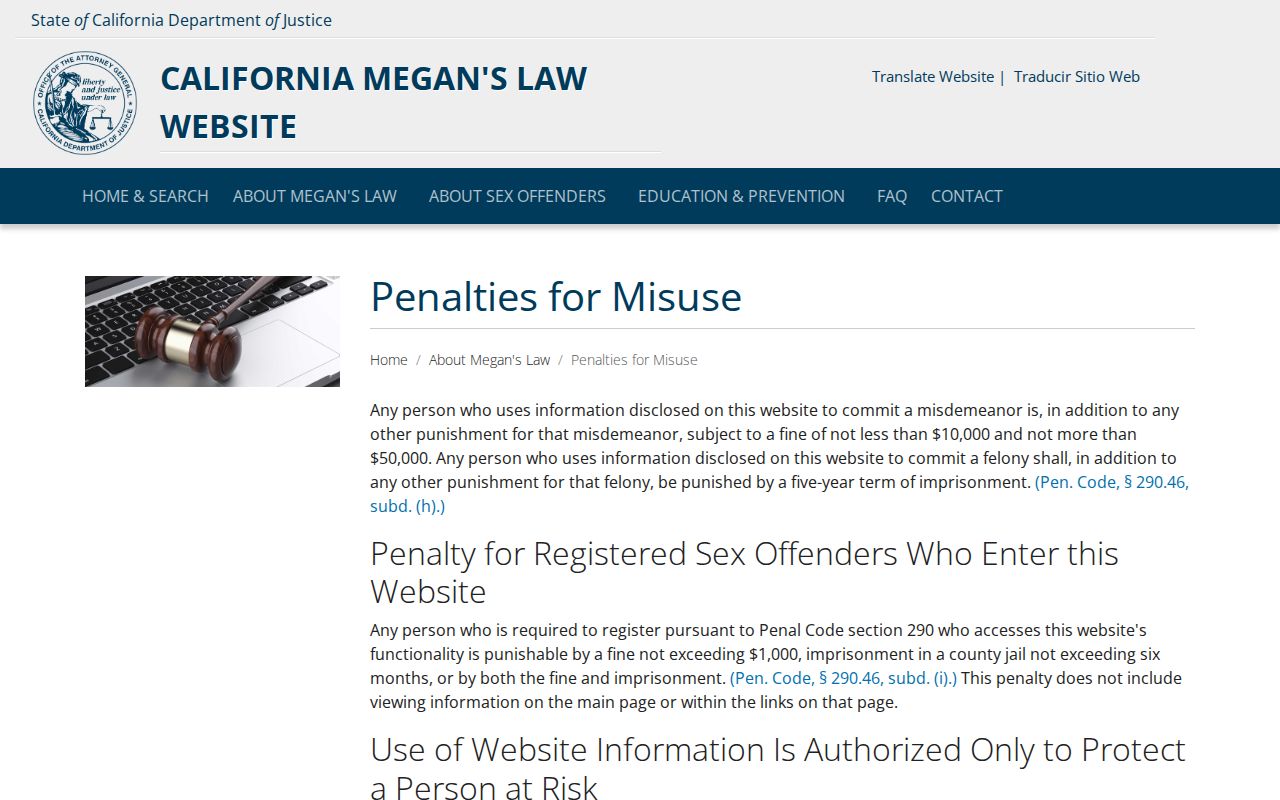
Those rules apply regardless of whether the information came from a name search, map, profile, or national query.
Misuse can be a crime: DOJ says using registry information to commit a misdemeanor can add a $10,000 to $50,000 fine, and using it to commit a felony can add five years of imprisonment. Misuse may also create civil liability and penalties.
DOJ's documented civil consequences can include actual damages, up to treble damages, a minimum award of $250, attorney's fees, exemplary damages, or a civil penalty reaching $25,000. These are not abstract website terms: they are part of the legal restrictions attached to the public data. The registry is authorized for protecting a person at risk, and official correction or law-enforcement reporting channels should replace direct confrontation.
Community awareness should remain focused on personal and family safety, verified official information, and reports to the proper agency. Do not contact, follow, threaten, or expose household members based on a registry entry.